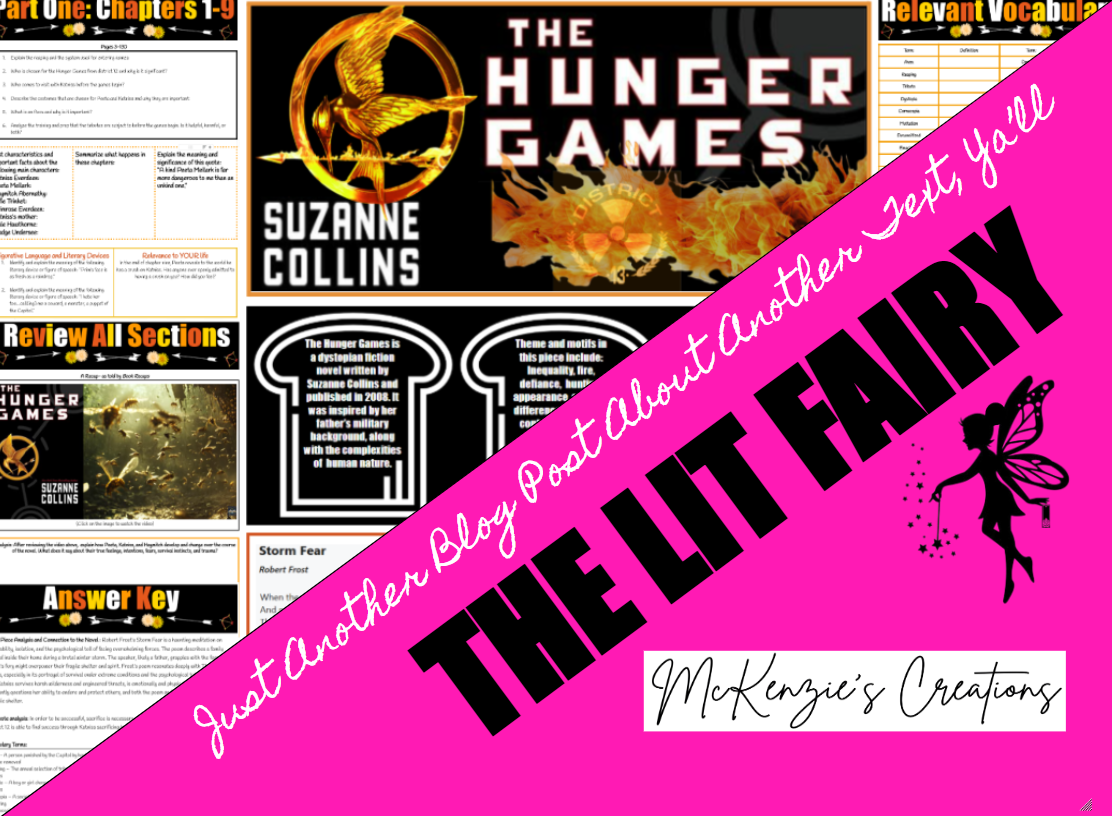

Let’s be honest: if you’ve ever side-eyed a reality show and thought, “This could get dark,” Suzanne Collins beat you to it. The Hunger Games is what happens when dystopia meets prime-time drama, and the prize isn’t a rose, it’s survival.
Katniss Everdeen, our bow-wielding, emotionally constipated heroine, volunteers as tribute to save her sister from being tossed into a televised death match. The Capitol, a glittery nightmare of excess and oppression, forces kids from each district to fight to the death in the annual Hunger Games. It’s brutal. It’s manipulative. It’s basically The Bachelor meets Lord of the Flies with better outfits. (The Capitol’s fashion game is less “Sunday best” and more “Met Gala meets fever dream.” Think feathered eyelashes, neon wigs, and enough glitter to blind a tribute at twenty paces.)
Katniss and Peeta (the cinnamon roll with a tragic backstory and a knack for camouflage) must navigate alliances, sponsors, and the Capitol’s thirst for drama. Spoiler: The Games are brutal. The alliances are fragile. And the love story? Possibly fake, possibly real, definitely complicated. And oh, the rebellion! (Through flowers, berries, and some other foliage)
Let’s take a closer look at our characters:
Katniss Everdeen: The original reluctant influencer. Think Billie Eilish meets Greta Thunberg: quiet, intense, and accidentally iconic.
Peeta Mellark: Soft boy energy. He’s the human equivalent of a Taylor Swift bridge: emotional, poetic, underestimated, and definitely in love with Katniss.
Gale Hawthorne: That guy who texts “u up?” during a revolution. Brooding, loyal, and possibly in love with Katniss?
Effie Trinket: Capitol couture queen. Imagine if Lady Gaga and a Pinterest board had a baby. Also, a little too upbeat for all the murder.
President Snow: The villain who smells like roses and repression. Basically every dystopian CEO in a Netflix original.
Back to the guts of this story: In the ashes of a collapsed North America, the nation of Panem rises, divided into twelve districts ruled by the opulent, tyrannical Capitol. Every year, as punishment for a past rebellion, the Capitol hosts the Hunger Games: a televised death match where one boy and one girl from each district fight to the death until only one remains. It’s dystopia meets reality TV, with forced violence, sponsors, and a whole lot of trauma.
Enter Katniss Everdeen, a 16-year-old from District 12 who volunteers to take her sister’s place in the Games. (Prim and her goat get to live another day!) She’s resourceful, guarded, and emotionally allergic to vulnerability. Alongside her is Peeta Mellark, the baker’s son with a heart full of unspoken feelings. As they’re thrust into the arena, they must navigate deadly terrain, manipulative gamemakers, and a some very angry children, tracker jackers, and mutts.
But this isn’t just a fight for survival, it’s a battle for identity, autonomy, and truth in a world that thrives on spectacle. Katniss becomes a reluctant symbol of resistance, Peeta becomes a master of emotional strategy, and the Capitol becomes increasingly desperate to control the narrative.
Looking for a novel study that covers everything you could ever want to know, practice and work through with your students? Check this resource out!

So what would this novel pair well with?
Music Vibes:
“Royals” by Lorde (Capitol critique in a nutshell)
“Survivor” by Destiny’s Child (Katniss’s theme song)
“The Man” by Taylor Swift (Peeta’s inner monologue)
“No Church in the Wild” by Jay-Z & Kanye (District 13 energy)
TV/Film Pairings:
Black Mirror (for the tech-dystopia parallels)
Squid Game (if the Hunger Games had a neon budget)
The Bachelor (but make it lethal)
Want to deepen the conversation or build a killer unit? Try these:
Short Stories:
“The Lottery” by Shirley Jackson: Tradition meets terror. Perfect for discussing blind obedience.
“Harrison Bergeron” by Kurt Vonnegut: Equality gone wrong. Satirical and sharp.
“The Ones Who Walk Away from Omelas” by Ursula K. Le Guin: Ethical dilemmas and utopian illusions.
Poems:
“Ozymandias” by Percy Bysshe Shelley: Power crumbles. Snow would hate it.
“The Unknown Citizen” by W.H. Auden: Bureaucracy meets identity loss.
“Burning a Book” by William Stafford: Truth, censorship, and rebellion.
Multimedia:
Documentary: The Social Dilemma: For Capitol-level manipulation via screens.
Podcast: You’re Wrong About: Great for unpacking misunderstood figures (Katniss, anyone?)
Art: Banksy’s dystopian pieces: Visual rebellion meets commentary.
Want to pair a super fun, jazzy search and find activity to help lighten the mood from all the kid murder? Check out this gem.

The Hunger Games isn’t just a YA juggernaut, it’s a mirror held up to our media, our politics, and our obsession with spectacle. Whether you’re teaching it, blogging it, or just rewatching the movies for Cinna’s flawless fashion sense, this story still hits hard.
So grab your bow, your sass, and your thematic analysis, because in this classroom, the odds are ever in your favor.
(see what I did there?!)
Leave a Reply